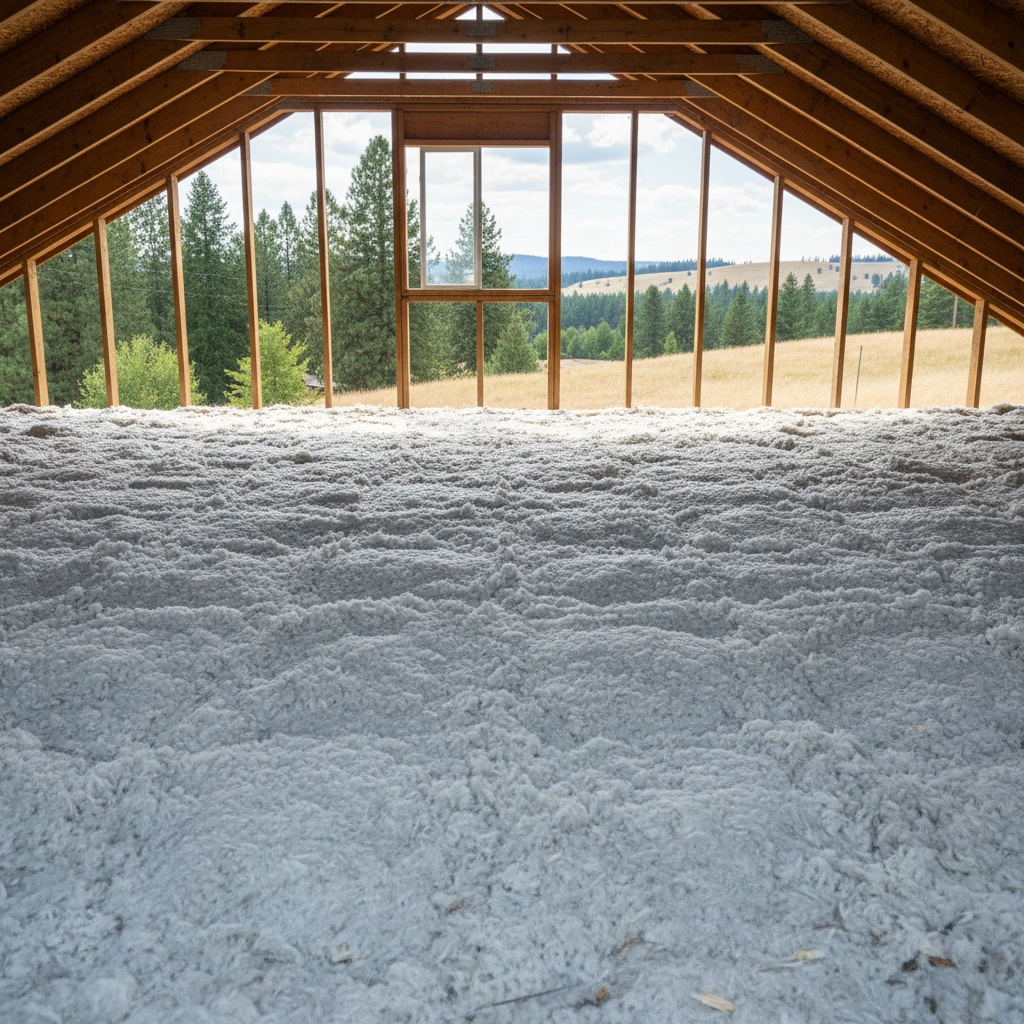
When homeowners look up into their attic, they often wonder what is keeping the house warm. Many homes in Spokane, WA feature blown-in cellulose or fiberglass insulation doing the heavy lifting overhead. Attic insulation maintenance is not a one-time project, especially in the Spokane climate where weather swings from freezing, snowy winters to hot, dry summers. Spokane Spray Foam Insulation is here to walk you through how to keep your loose-fill insulation in solid shape, what warning signs to look out for, and when it is time to bring in professional help.
What Regular Maintenance Looks Like
Homeowners do not need to climb up into their rafters every month with a flashlight. Checking on your attic twice a year—ideally in the spring after the snow melts and in the fall before the first freeze hits—is usually plenty of time. When you go up there, you should look at a few basic things:
- Check the depth markers to make sure the material has not settled below the recommended R-value for our region.
- Look for any signs of shifting caused by drafts or past roof work.
- Inspect your soffit vents to ensure the loose material has not blocked the airflow coming in from outside.
If you notice the depth is uneven, you can gently rake or redistribute it, but be careful not to pack it down. Blown-in insulation works by trapping air between the fibers. If you compress it, you lose that thermal resistance.
Warning Signs Your Attic Needs Attention
Winters in Spokane are rough on roofs. If your attic insulation is not performing, your house will usually give you some clear hints. Here is what Spokane Spray Foam Insulation sees out on jobs all the time:
Ice dams are a major red flag. If heat is escaping from your living space because your insulation has thinned out or shifted, it melts the snow on your roof. That water runs down and refreezes at your eaves, turning into a damaging ice dam. Another big giveaway is skyrocketing heating bills or rooms on your second floor that feel drafty no matter how high you turn up the furnace.
Moisture is the enemy. If you spot dark stains on your roof decking, damp patches in the loose fibers, or musty smells when you pop the attic hatch, you have got a moisture problem. Sometimes it is a leaky roof, and other times it is warm indoor air hitting a cold attic and condensing. Wet cellulose or fiberglass loses its insulating power fast and can turn into a mold farm.
Extending the Life of Your Insulation
Homeowners want their attic investment to last for 15 to 20 years or more. The best way to do that is to protect the environment the insulation sits in. Make sure your bathroom and kitchen exhaust fans vent all the way outside through the roof or gable walls—never just dump that moist air straight into the attic space. Keep your roof flashing sealed tight, and check your gutters every autumn so water does not back up under the shingles.
Spokane Spray Foam Insulation often tells homeowners that air sealing is just as important as the insulation itself. Sealing up gaps around wire penetrations and plumbing stacks keeps conditioned air inside your living space where it belongs, stopping moisture from migrating into your attic in the first place.
When to Call a Professional
Some things you can handle with a flashlight and a pair of work gloves, but other situations demand a pro. If you find mold colonies spreading across your roof sheathing or deep into the loose-fill material, do not try to spray it with household cleaner. Contaminated blown-in insulation generally has to be removed completely because mold spores get trapped inside the fibers.
You should also call in an expert if you are dealing with wildfire smoke contamination, which has become a frequent headache during our dry summers in Spokane. Attic insulation acts like a giant air filter, soaking up ash and soot through the soffit vents. Once those odor compounds get baked into the material by the afternoon sun, no amount of do-it-yourself deodorizing is going to fix it. Spokane Spray Foam Insulation brings in a local crew to test the depth, check for hidden damage, and get your attic back to peak efficiency so your home stays comfortable year-round.