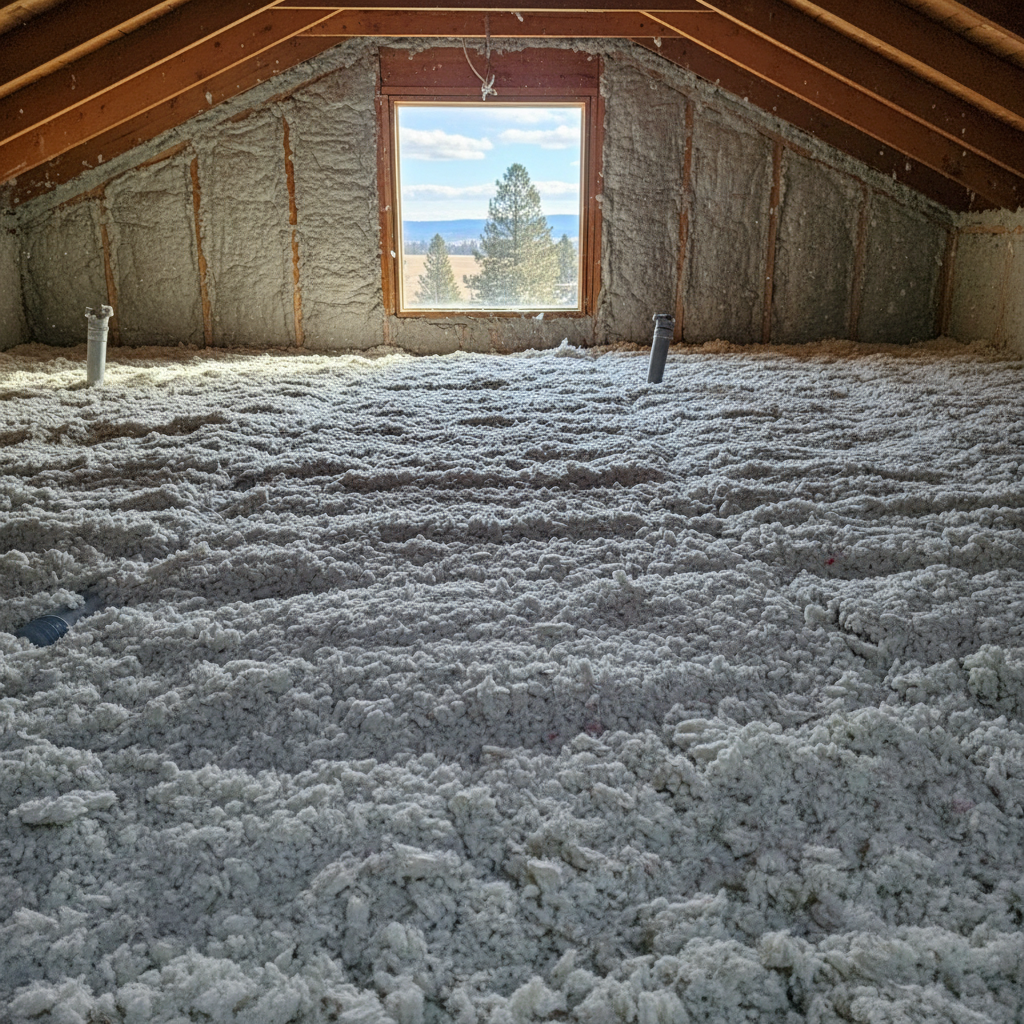
Homeowners crawling up into their attic after a heavy snowstorm on the South Hill often wonder how their insulation is holding up. Blown-In Insulation is a workhorse in our region, but it requires regular attention. Between the freezing winter freezes and the dry, dusty eastern Washington summers, your attic takes a beating. Spokane Spray Foam Insulation is going to walk you through what it actually takes to keep your loose-fill cellulose or fiberglass performing right year after year without wasting your hard-earned cash.
What Regular Blown-In Maintenance Looks Like
Property owners do not need to be up in the attic every weekend. Twice a year is plenty. Spring and fall are prime times because the weather is much safer for attic inspections. Grab a flashlight and a dust mask. What Spokane Spray Foam Insulation recommends looking for is simple: even coverage. Blown-In Insulation material can shift over time due to attic airflow, vibrations, or the occasional pest moving in.
- Check the depth markers you or your installer put in
- Look for low spots near the eaves or gable vents
- Make sure nobody stored heavy holiday bins right on top of the loose fill, compressing it flat
If you see areas where the Blown-In Insulation looks thin, do not panic. Cellulose settles a bit naturally over its first few years, but it should not look like craters on the moon.
Warning Signs Your Attic Is Struggling
Your house usually tells you when the attic Blown-In Insulation is failing. You just have to listen. If your heating bill spikes out of nowhere during a January cold snap in Shadle Park, your Blown-In Insulation might have lost its R-value or shifted.
Ice dams are another major red flag. When heat escapes from your living space into the attic because the Blown-In Insulation layer is thin or blocked at the soffits, it melts the snow on your roof. That water runs down and freezes at the cold eaves. If you see giant icicles hanging off your gutters every winter, your attic system has a thermal leak somewhere.
Musty smells or damp spots mean moisture is getting trapped. Cellulose treated with borate resists mold pretty well, but prolonged roof leaks will turn loose-fill into a heavy, soggy mess that loses all thermal resistance.
Extending the Life of Your Insulation
Air sealing is the absolute best way to protect your Blown-In Insulation. If air cannot leak out of your house into the attic, your loose-fill stays dry and fluffy. Before you ever add more material up there, make sure your top plates, wire penetrations, and light fixtures are sealed up tight with caulk or expanding foam.
Ventilation matters too. Spokane weather brings big temperature swings, and your attic needs to breathe. Keep those soffit vents clear. Never stack boxes right up against the edge of the roofline where the Blown-In Insulation meets the exterior wall. If you choke off those vents, humidity builds up, and your Blown-In Insulation pays the price.
When to Call Spokane Spray Foam Insulation
Sometimes routine checks turn into projects that are too big for a Saturday afternoon. If you find a massive roof leak that ruined half your attic Blown-In Insulation, you should not just rake it around. Soggy Blown-In Insulation needs to be completely removed, the area dried out, and fresh material blown back in.
We see it all the time across Spokane—critters like mice or squirrels nesting in loose fill, chewing up the material, and contaminating the space. If you have an unwanted wildlife crew up there, call an exterminator first, then contact Spokane Spray Foam Insulation. Spokane Spray Foam Insulation provides Blown-In Insulation services for homes in Spokane, Washington.