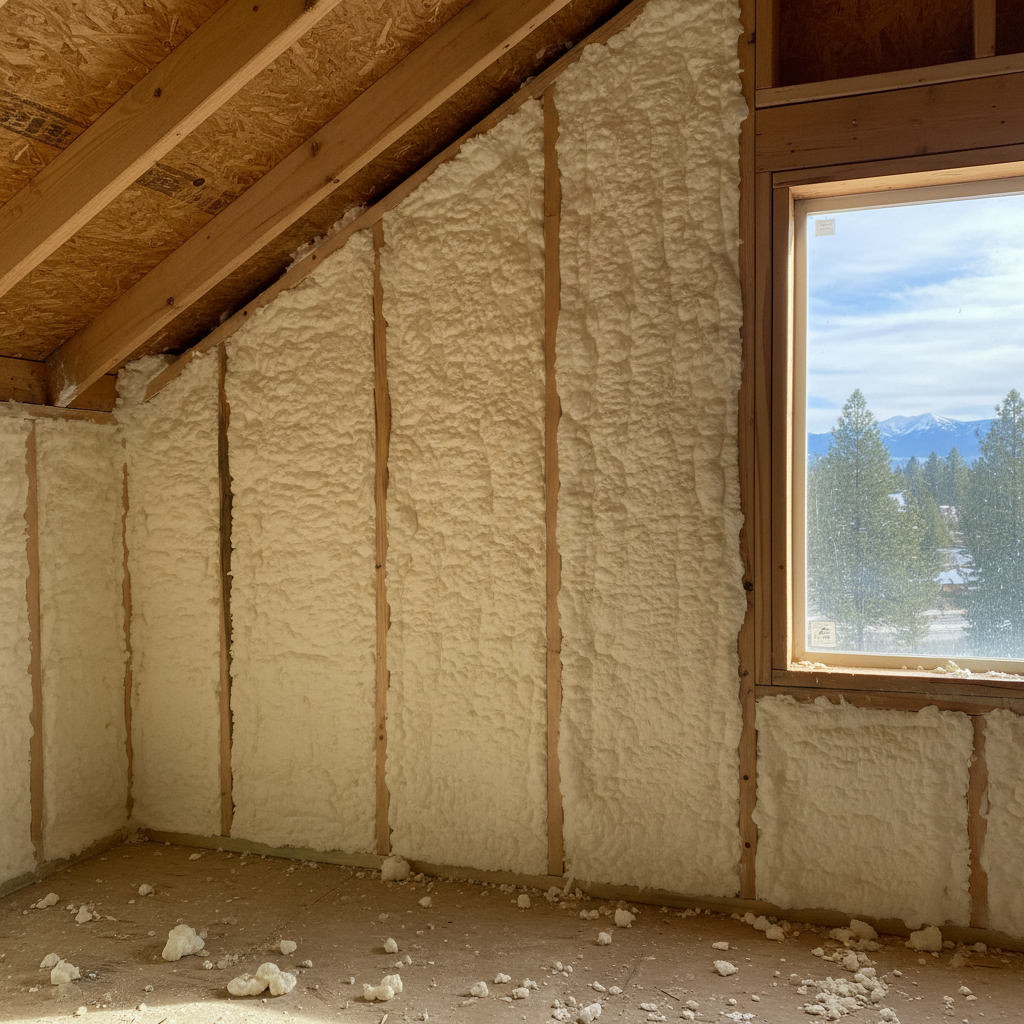
Thinking about open-cell spray foam for your place? Good. It's a smart move for many Spokane homeowners, but there's also a lot of chatter out there, and not all of it is accurate. As someone who installs this stuff every day, I hear the same questions over and over. So, let's get into it. Here are the real answers to what you're probably wondering about open-cell spray foam.
What exactly IS open-cell spray foam?
Alright, let's break it down simply. Open-cell spray foam is a type of insulation that, when sprayed, expands rapidly and then cures into a soft, flexible material. Think of it like a sponge – it's full of tiny, interconnected cells that are open to the air. That's why we call it 'open-cell.' Because these cells are open, air can move through them, meaning it's not a vapor barrier on its own. It's usually a lower density product compared to closed-cell foam, and it's fantastic for filling odd-shaped cavities and sealing up all those little air leaks that traditional insulation just can't touch. It really is a game-changer for comfort and energy efficiency.
Where is open-cell foam best used in a Spokane home?
You'll typically find open-cell foam shining brightest in areas where you want to control air movement and provide a good thermal barrier, but don't necessarily need a vapor barrier. Attics are a prime example. We often spray it directly to the underside of the roof deck, which turns your attic into a conditioned space. This means your HVAC isn't fighting against a superheated or supercooled attic all the time, and that's a big deal during our hot Spokane summers and freezing winters. It's also great for wall cavities, especially in older homes where the framing isn't perfectly uniform. It expands to fill every nook and cranny, creating a tight seal. Basements and crawl spaces can also benefit, but you need to be mindful of moisture management, which brings me to the next point.
Does open-cell foam cause moisture problems or mold?
This is a big one, and it's often misunderstood. No, open-cell foam itself doesn't cause moisture problems or mold. What causes those issues is uncontrolled moisture getting into an area, regardless of the insulation type. Because open-cell foam isn't a vapor barrier, if you have a moisture source – like a leaky foundation or poor drainage outside – that moisture can pass through the foam and potentially condense on colder surfaces behind it, leading to problems. This is why proper ventilation, moisture control strategies, and a good understanding of building science are crucial. When installed correctly in the right application, and with appropriate moisture management, open-cell foam is perfectly safe and doesn't promote mold growth. In fact, it often helps prevent it by eliminating condensation points that traditional insulation can create.
Is it really worth the extra cost compared to fiberglass or cellulose?
I get this question all the time. On the surface, yes, the upfront cost for spray foam, including open-cell, is higher than traditional batt or blown-in insulation. But you're not just buying insulation; you're buying an air seal. Think about it: fiberglass and cellulose slow down heat transfer, but they don't stop air movement nearly as effectively. Air leaks are massive energy suckers! With open-cell foam, you're getting both insulation and an incredibly effective air barrier in one shot. This means significantly lower energy bills, a much more comfortable home without drafts or hot/cold spots, and better indoor air quality because outside pollutants and allergens are kept out. Over the lifespan of your home, the savings and comfort often make it a very worthwhile investment. It's not just an expense; it's an upgrade.
What about off-gassing or indoor air quality concerns?
Another valid concern. When open-cell foam is first installed, there's a curing process that releases volatile organic compounds (VOCs). This is why we always tell homeowners to vacate the property during installation and for at least 24-48 hours afterward, sometimes longer depending on ventilation and product specifics. Once it's fully cured, the foam is inert. Modern spray foams, especially those used by reputable companies like Spokane Spray Foam Insulation, are rigorously tested and certified to meet low-VOC emission standards. We're talking about products that are safe for indoor use once cured. You shouldn't have any lingering odors or air quality issues if it's installed correctly and allowed to cure properly.
How long does open-cell spray foam last?
This stuff is built to last. Unlike fiberglass or cellulose, which can settle, sag, or degrade over time, open-cell spray foam maintains its integrity and R-value for the life of the building. It doesn't slump, it doesn't get eaten by pests, and it's not a food source for mold (though, as I said, moisture can still be an issue if not managed). Once it's in, it's in. You won't be needing to re-insulate your attic or walls again. It's a permanent solution, which is another reason it's such a good long-term investment for your home.
Can I install open-cell spray foam myself?
Look, I appreciate a good DIY project as much as the next guy, but spray foam is not one of them. This isn't like rolling out some batts of fiberglass. Applying spray foam requires specialized equipment, extensive training, and a deep understanding of the chemicals involved. You need to get the mix ratios just right, understand the substrate, control the temperature and humidity, and apply it evenly and safely. If it's not mixed or applied correctly, you can end up with under-performance, off-gassing issues, or even a sticky, uncured mess that's incredibly difficult and expensive to remove. This is definitely a job for experienced professionals. You want it done right the first time, and that means calling in the experts.
Does it attract pests?
Nope, quite the opposite. Pests like rodents and insects aren't interested in spray foam as a food source. In fact, because open-cell foam expands and seals all those tiny gaps and cracks in your building envelope, it actually makes it much harder for pests to get into your home in the first place. You're essentially creating a much more robust barrier against critters that might otherwise chew through traditional insulation or squeeze through small openings. It's another bonus for keeping your home clean and pest-free.
Hopefully, this clears up some of the common questions you've got about open-cell spray foam. It's a fantastic product when used correctly, and it can make a huge difference in your home's comfort and energy efficiency, especially with our wild Spokane weather. If you've got more questions, or you're ready to talk about an estimate, just give us a call at Spokane Spray Foam Insulation. We're always happy to chat.